





Selecting the Right ERP Implementation Partner: A Comprehensive Guide
- Highbar Technocrat
- Blogs
- December 16, 2023
Connect With Us
Selecting the Right ERP Implementation Partner: A Comprehensive Guide
- Highbar Technocrat
- Blogs
- December 16, 2023
Connect With Us

ERP systems play an important role in modern business operations by integrating various organizational functions. However, implementing an ERP system is a complex and challenging task that requires careful planning, skilled resources, and the right implementation partner. Choosing the right ERP implementation partner is crucial for the success of your ERP project. We’ll go over the main factors to take into account when selecting an ERP implementation partner in this blog article, along with a comprehensive guide to help you make an informed choice.
But why do you need the right ERP implementation partner?
Choosing the right ERP implementation partner is paramount for the success of any organization’s digital transformation journey. An experienced and skilled ERP partner brings invaluable expertise, guiding businesses through the complexities of ERP implementation with finesse and efficiency. Such a partner not only has in-depth understanding of the chosen ERP system, but also knows the industry’s unique needs and concerns. They streamline the implementation process, ensuring the ERP solution aligns seamlessly with the organization’s existing workflows and processes.
Moreover, a reliable partner provides continuous support, helping businesses navigate unexpected hurdles, adapt to changing requirements, and troubleshoot issues promptly. Their expertise in change management and training ensures that employees embrace the new system effectively, maximizing productivity. Businesses may maximize their ERP investment, promote operational excellence, raise customer happiness, and maintain their competitiveness in the quickly changing business environment by working with the proper implementation partner.
Types of ERP systems
Enterprise Resource Planning (ERP) systems come in various types, each designed to meet specific business needs and industries. Here are some of the common types of ERP systems:
- On-Premises ERP Systems: These are traditional ERP systems that are installed and run on the organization’s hardware and servers. On-premises ERP systems offer complete control and customization but require substantial upfront investments in infrastructure and IT support.
- Cloud-Based ERP Systems: Cloud ERP systems are hosted on remote servers, accessible over the internet. They are known for their scalability, flexibility, and reduced upfront costs. Cloud-based ERP is especially popular among small and medium-sized businesses (SMBs) as it eliminates the need for in-house server maintenance.
- Open-Source ERP Systems: Open-source ERP systems are built on open-source software, allowing organizations to access the source code and customize the system as needed. They offer cost-effective options for customization but may require more technical expertise.
- Industry-Specific ERP Systems: Some ERP systems are tailored to verticals, such as manufacturing, healthcare, retail, or finance. These industry-specific ERP solutions often come with pre-built modules and features that cater to the unique needs of a particular sector.
- Small and Medium-Sized Business (SMB) ERP Systems: The needs of smaller businesses with fewer resources are catered to by these ERP systems. They frequently have more affordable prices and feature sets that are more suited to SMB needs.
- ERP Suites: Accounting, human resources, supply chain management, and CRM are just a few of the areas that ERP suites address in depth. For big businesses wishing to consolidate their operations, they offer a comprehensive solution.
- Modular ERP Systems: Modular ERP systems allow organizations to choose and implement specific modules that address their immediate needs. As their business grows or changes, they can add additional modules to extend the ERP’s functionality.
- Mobile ERP Systems: With the increasing reliance on mobile devices, mobile ERP systems offer access to critical business data and functions on smartphones and tablets. This flexibility enables remote work and on-the-go decision-making.
- Two-Tier ERP Systems: Large organizations with multiple subsidiaries or business units may opt for a two-tier ERP approach. This involves using different ERP systems for the parent company and its subsidiaries, allowing for greater flexibility and customization at the subsidiary level while maintaining consistency at the corporate level.
- Legacy ERP Systems: These are older ERP systems that some organizations still use. While they may lack the features and flexibility of modern ERP systems, they might be deeply integrated into an organization’s processes, making migration to a new system a complex and costly endeavor.
The choice of ERP system type depends on an organization’s size, industry, specific requirements, budget, and future growth plans. Selecting the right ERP system is a crucial decision that can significantly impact an organization’s efficiency and competitiveness.
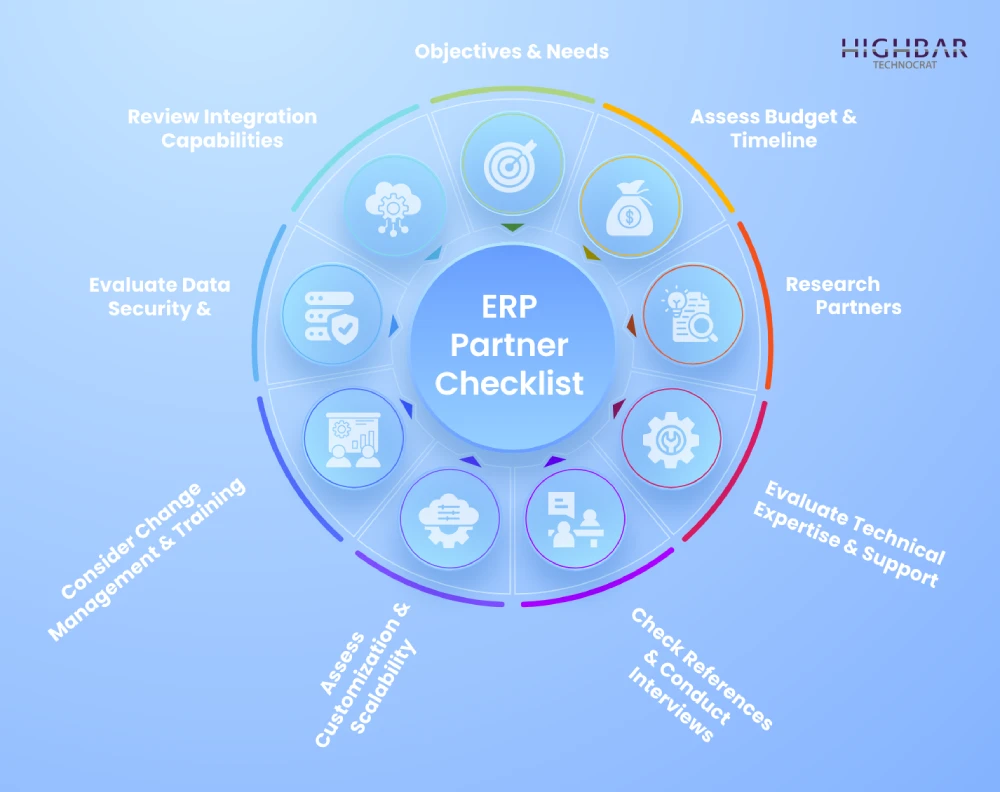
Eight key factors to consider when selecting an ERP implementation partner
1. Define Your Objectives and Requirements
Before you start looking for an ERP implementation partner, it’s essential to define your objectives and requirements clearly. Identify the precise objectives you hope to accomplish with the ERP system, such as increasing customer satisfaction, increasing efficiency, or simplifying financial processes. Create a detailed list of features and functionalities your organization needs from the ERP system.
2. Assess Your Budget and Timeline
Determine your budget constraints and the timeframe within which you want the ERP system to be implemented. Understanding your budget will help you shortlist potential implementation partners who can work within your financial limitations. Establishing a realistic timeline is crucial to ensure the implementation process stays on track and meets your organization’s needs.
3. Research Potential ERP Implementation Partners
Conduct thorough research to identify potential ERP implementation partners. Look for companies with a strong track record of successful ERP implementations in your industry. Read customer testimonials and case studies to gauge their expertise and customer satisfaction. Consider factors such as experience, industry knowledge, and the services offered.
4. Evaluate Technical Expertise and Support Services
Assess the technical expertise of potential implementation partners. They should have a team of experienced developers, system architects, and consultants well-versed in the ERP system you plan to implement. Inquire about the support services they offer post-implementation, such as software updates, maintenance, and troubleshooting. A reliable partner should provide ongoing support to address issues arising after the ERP system goes live.
5. Check References and Conduct Interviews
Request references from prior customers who implemented ERP systems with possible partners. Get in touch with these references to find out about their encounters, difficulties, and general contentment with the implementation partner. Additionally, conduct interviews with the shortlisted partners to get a better understanding of their approach, communication style, and problem-solving abilities.
6. Assess Customization and Scalability
Evaluate the partner’s ability to customize the ERP system according to your organization’s needs. A one-size-fits-all approach rarely works in ERP implementations, so ensure that the partner can tailor the system to match your unique processes and requirements. Also, consider the scalability of the ERP solution – it should be capable of accommodating your organization’s growth and evolving needs over time.
7. Consider Change Management and Training Support
Effective change management is crucial during ERP implementations to ensure smooth transitions and minimize employee resistance. Choose a partner that offers change management services and provides comprehensive training programs to educate your staff about the new system. Adequate training and support empower your employees to use the ERP system efficiently, maximizing its benefits for your organization.
8. Evaluate Data Security and Compliance
Data security is a top priority when implementing an ERP system, primarily if your organization handles sensitive information. Ensure the implementation partner follows industry best practices for data security and compliance with relevant regulations such as GDPR or HIPAA, depending on your industry and location. Discuss security measures, data encryption, and backup protocols with the partner to safeguard your organization’s valuable data.
Conclusion
Selecting the right ERP implementation partner is a critical decision that can significantly impact your organization’s efficiency, productivity, and competitiveness. By defining your objectives, conducting thorough research, evaluating technical expertise, checking references, and considering factors like customization, scalability, change management, and data security, you can make an informed choice. A reliable and experienced implementation partner will guide you through the process, ensuring a successful ERP implementation that aligns with your business goals and objectives.
Connect With Us
Comments
