





ERP infrastructure
How Integrated ERP Infrastructure Reduces Cost Leakage in Multi-Location Infrastructure Project
- Highbar Technocrat
- Blogs
- March 17, 2026
Connect With Us
Today, infrastructure projects are less likely to be geographically isolated. Large EPC and infrastructure companies undertake highway projects, metro projects, bridge projects, water projects, and urban development projects in different geographies. Although this provides opportunities for growth, it also presents a challenge that is often overlooked cost leakage.
Cost leakage does not always surface in the form of a notable loss. Rather, it is the cumulative effect of inefficiencies, such as delayed material reconciliation, unauthorised deviations, redundant purchases, underutilised assets, inconsistent billing, and poor financial management. It is not the lack of effort that is a problem for the leadership teams, but the lack of a common digital backbone. This is where ERP infrastructure implemented with domain depth by partners like Highbar Technocrat, plays a strategic role.
An integrated ERP infrastructure is no longer a back-office system. It is a control framework that aligns projects, finance, procurement, assets, and governance into a single source of truth critical for managing multi-location infrastructure programs at scale.
The Hidden Nature of Cost Leakage in Infrastructure Projects
In contrast to manufacturing, infrastructure projects involve dynamic, site-driven environments. Every project site is almost like a micro-business, with its own suppliers, subcontractors, equipment, labour, and regulatory needs. Without a centralised ERP solution in place, ERP system infrastructure organisations are left with no choice but to work with multiple systems, spreadsheets, and manual processes.
There are blind spots in this scenario. The project team might be concentrating on the speed of execution, whereas the finance team is struggling to compile the right cost information. The procurement team could be finalising contracts centrally, but site purchases are not under control due to the need for speed. Equipment could be available at one site, while another site rents the same equipment. Individually, these issues seem manageable. Together, they are eating into margins.
Leadership often realises the extent of cost leakage only during audits, delayed closures, or when cash flows tighten by which time corrective action becomes reactive rather than preventive.This is a recurring challenge Highbar Technocrat addresses while designing ERP system infrastructure for infrastructure-heavy organisations.
Why Traditional Systems Fail in Multi-Location Infra Environments
Many infrastructure organisations operate with partial digitisation—separate tools for accounting, procurement, project tracking, and asset management. While these systems may work in isolation, they fail under the complexity of geographically dispersed projects.
The core problem lies in the absence of real-time integration. Data moves with some lag, approvals occur offline, and reporting becomes a look-back process. Decisions are made based on outdated or incomplete data. In this scenario, it becomes difficult to enforce standardised controls in different locations.
An integrated ERP infrastructure, such as the frameworks implemented by Highbar Technocrat, addresses this not by adding more reports, but by embedding control mechanisms directly into operational workflows.
ERP Infrastructure as a Cost Governance Framework
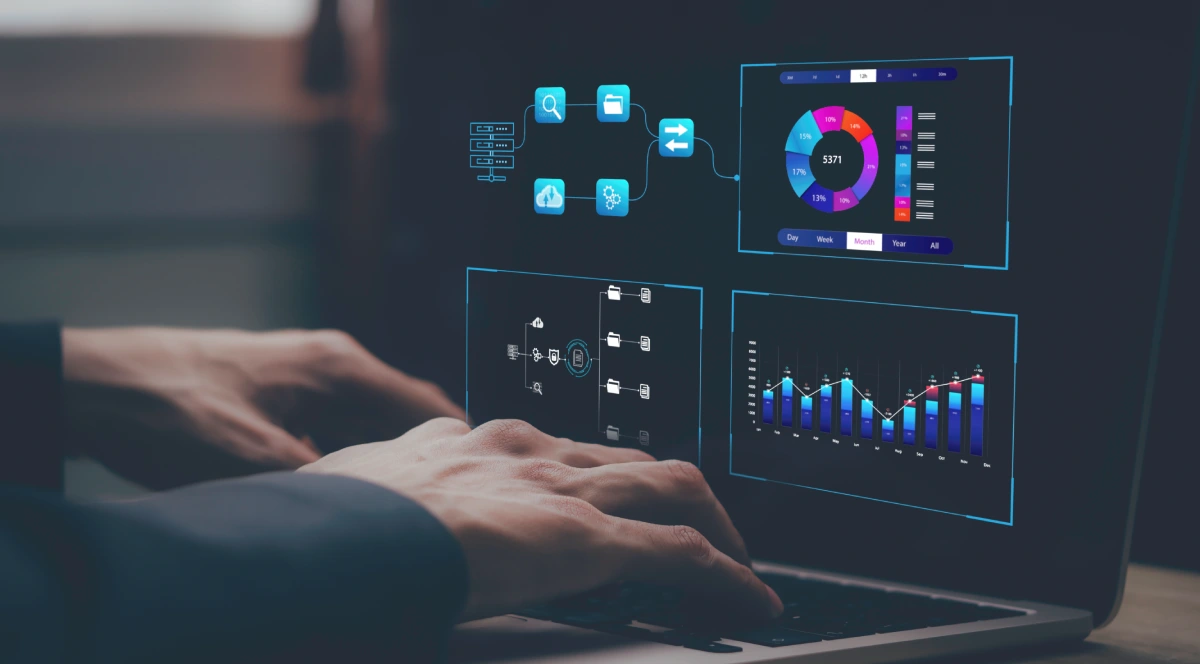
At its core, ERP infrastructure acts as a governance layer across the project lifecycle from bid estimation to project closure. It standardises how costs are planned, incurred, approved, and monitored across all locations.
With a unified ERP system infrastructure, every financial and operational transaction follows predefined business rules. Budgets are tied to work breakdown structures. Procurement is synchronised with approved BOQs. Payments are made only after ascertained progress. This helps in maintaining a discipline that reduces leakage associated with manual overrides.
More importantly, management receives real-time feedback on cost deviations, enabling corrective measures rather than remedial action an outcome infrastructure leaders expect from ERP programs led by Highbar Technocrat.
Eliminating Procurement and Inventory Leakages
Procurement serves as the primary source for cost overruns, which affect infrastructure projects that use multiple independent operational sites. The organisation faces difficulties because of its need to make emergency purchases, which leads to unpredictable vendor costs and results in excess inventory and material theft..
An integrated ERP system infrastructure centralises procurement policies while allowing site-level execution. Project plans determine the material requirements of the project instead of using ad-hoc requests. The system enables visibility of vendor contracts across different locations to ensure price consistency. The system tracks inventory movements in real time, which helps to minimise losses and overstocking.
By aligning procurement, inventory, and finance on a single platform, ERP infrastructure implemented with sector-specific logic by Highbar Technocrat ensures that every rupee spent is planned, approved, and traceable.
Controlling Project Execution Costs Across Locations
Project execution involves continuous cost exposure through its three main components, which include labour costs, subcontracting costs, equipment usage costs, and any changes that occur. The costs in multi-location environments become difficult to control because of two main issues, which include late cost reporting and problems with data collection methods.
The ERP infrastructure establishes a connection between project systems and financial and operational systems.. Daily progress updates directly impact cost forecasts. The validation process of subcontractor bills verifies their accuracy through examination of completed work. The process tracks variations while showing their financial impact until approval is granted.
The system requires immediate links that connect actual work progress with financial performance results. The system changes project control from monthly reviews to continuous management practice.
Optimizing Equipment and Asset Utilization
Infrastructure organizations invest heavily in equipment, yet utilization remains suboptimal when assets are managed locally. One project may experience downtime while another hires external equipment at premium rates.
An integrated ERP system infrastructure provides enterprise-wide visibility into asset availability, utilization, and maintenance status. Equipment can be redeployed across locations based on demand. Maintenance schedules are standardized, reducing breakdown-related cost overruns.
By treating equipment as shared enterprise assets rather than site-owned resources, ERP infrastructure directly reduces avoidable capital and operating expenditure.
Strengthening Financial Control and Faster Closures
Financial consolidation across different project sites experiences delays and makes errors. The actual project profitability assessment becomes challenging because of delayed postings, reconciliations, and manual adjustments.
The ERP system establishes financial integration automation between various projects and locations and different business entities. Transactions are recorded at source, eliminating duplicate entries. Period-end closures become faster and more accurate.
The leadership requirements for this work require organisations to provide stable cash flow forecasting, timely financial reporting, and accurate margin assessments, which they need to maintain their growth in capital-intensive infrastructure enterprises.
From Cost Control to Strategic Decision-Making
The actual worth of ERP systems goes beyond their capability to stop data breaches. Organisations can use their clean integrated data to assess project performance across multiple regions. The leadership team can determine which locations exceed their budget all the time, which vendors provide value, and which project types present an increased risk.
The insight determines which strategic actions to take because it provides guidance on entering new markets, on contract negotiations, and on changing execution methods. The ERP system infrastructure establishes a base for organisations to achieve sustained competitive advantage beyond their operational efficiency gains.
Conclusion: ERP Infrastructure as a Margin Protection Strategy
The cost leakage which occurs in multi-location infrastructure projects happens because of established systemic patterns. The combination of broken systems together with slow detection processes and different management methods, creates conditions which allow inefficiencies to succeed. The solution to this problem needs more than increased monitoring and extra reporting requirements.
The unified ERP system of the organisation establishes essential structural elements which enable it to handle complex operations at high volume. The unification of projects with procurement and assets, and finance into one digital system, enables organisations to stop cost leaks before they occur.
For infrastructure leaders focused on sustainable growth and margin protection, investing in a robust ERP system infrastructure is not an IT decision—it is a strategic imperative.
Comments
