



RISE with SAP
RISE with SAP vs S/4HANA On-Premise: Which Should Infra Companies Choose?
- Highbar Technocrat
- Blogs
- August 25, 2026
Connect With Us
Infrastructure companies rarely struggle with knowing what a modern ERP should do for them. The struggle begins the moment the conversation turns to how it should be deployed.
Highways, metro corridors, water networks, and industrial builds already run on tight margins and tighter timelines, and the deployment model an organisation picks for its SAP S/4HANA ERP solution can either support that pace or quietly work against it.
The two options that rule the choice at the moment are RISE with SAP and On-Premise S/4HANA. The end destination is always the S/4HANA core, but what makes the two different is the ownership of the infrastructure, management of the operation, and speed of reaction to changes on the project level. For infra companies, this point plays a greater role than any other industry, since project implementation is hardly ever predictable.
Understanding RISE with SAP
RISE with SAP combines the S/4HANA Cloud Private Edition software application, the infrastructure hosted by the hyperscaler, and the technical management by SAP into one subscription agreement.
The company no longer needs to purchase hardware, make hosting agreements, and manage the basis layer separately but can pay a monthly subscription to SAP.
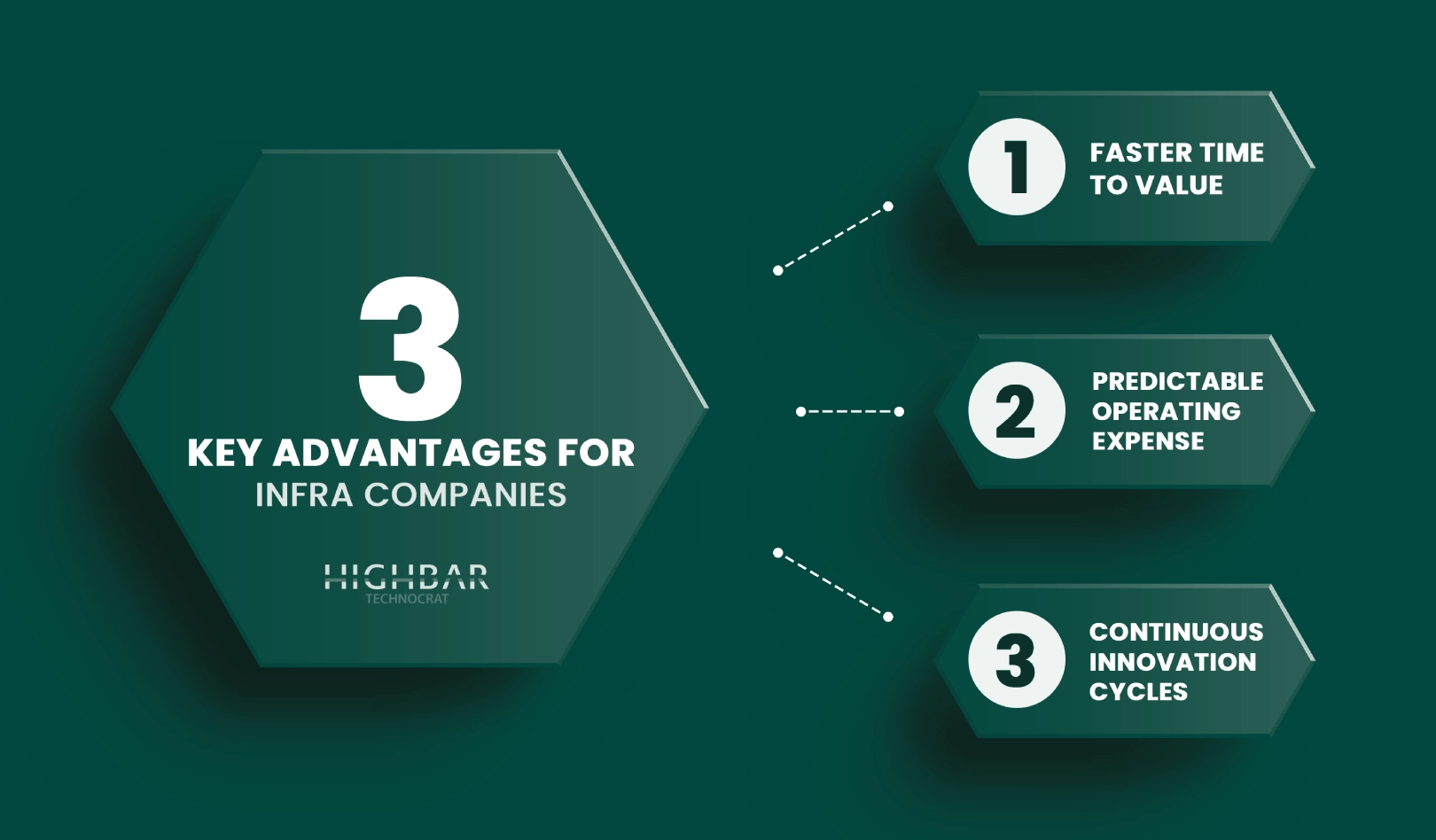
For infra companies, this translates into a few concrete advantages:
1. Faster Time to Value
Because of the bundling of the infrastructure and the hosting services, there is no need to wait for the procurement or construction cycle of data centres prior to the implementation of the project. This will work well for infra companies that have started their projects in new places.
2. Predictable Operating Expense
RISE allows a high one-time cost to become an operational expenditure. This may help such EPC and infrastructure companies that have their cash flows linked to milestone payments in a project and billing process. However, RISE cost may be slightly more expensive than the actual cash cost for a good on-premise data center estate.
3. Continuous Innovation Cycles
S/4HANA Cloud Private Edition is delivered to RISE users through a regular release process. As a result, all new features such as AI-based planning, enhanced analytics, and further IoT/BIM integration happen automatically, not requiring additional upgrade projects. For companies with several projects running simultaneously, this approach helps avoid constant disruptions.
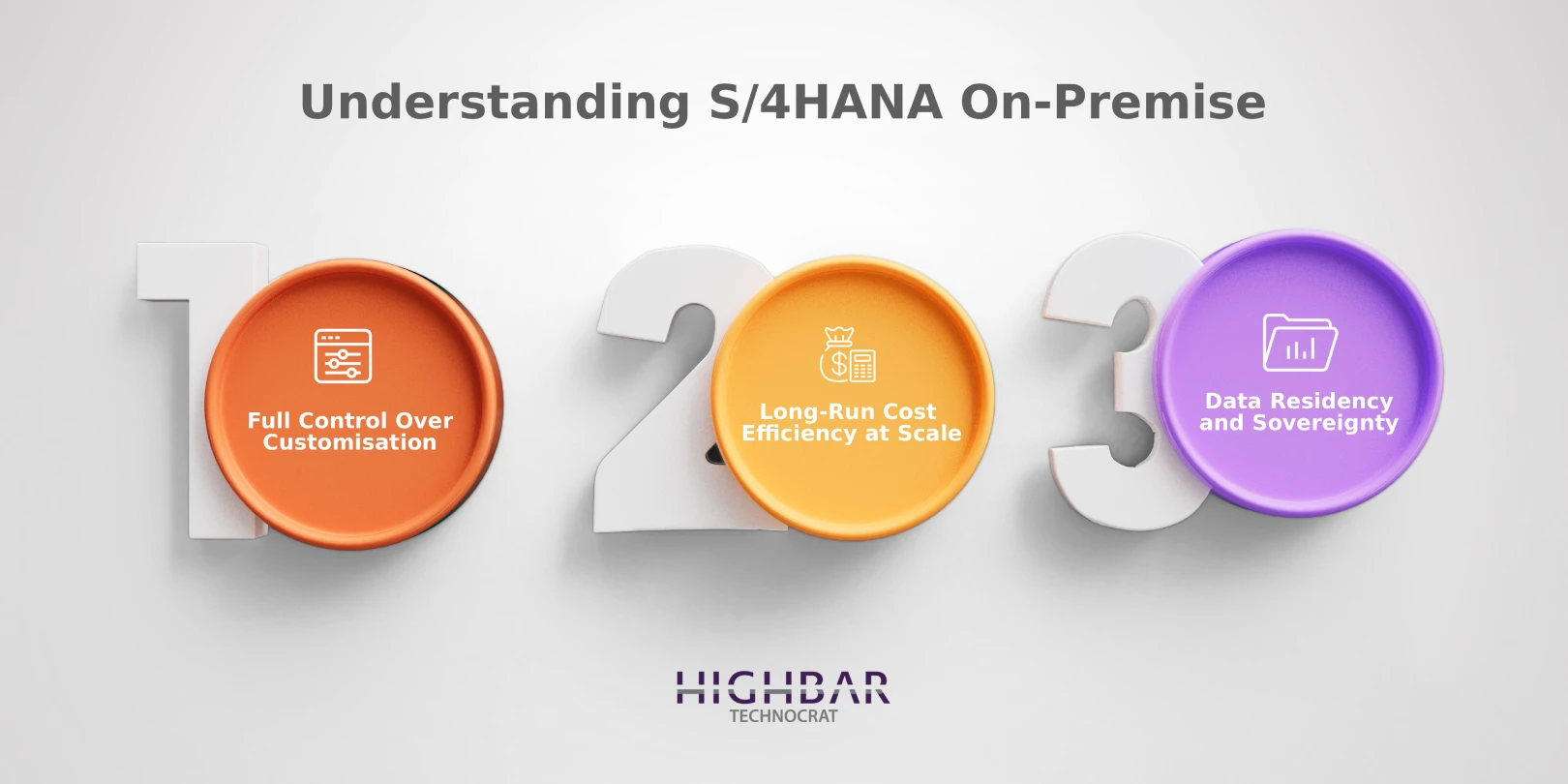
Understanding S/4HANA On-Premise
S/4HANA on-premise keeps the application, database, and infrastructure fully within the organisation’s control, whether hosted in a company-owned data centre or through a managed service provider. Nothing here is fundamentally different in the application itself; the same S/4HANA core runs underneath, but the ownership model changes considerably.
1. Full Control Over Customisation
Customizations that may be present in large organizations using specialized project management, equipment, or costing systems may not work very well within the standardized cloud computing model. This makes on-premise deployment more attractive to such organizations because they will not have to change the scope of work with their hosting providers.
2. Long-Run Cost Efficiency at Scale
For infra companies with the internal capability to run their own basis and infrastructure teams, on-premise can work out more cost-efficient over a five-year horizon, since the organisation is not paying a premium for outsourced operations it is already equipped to handle internally.
3. Data Residency and Sovereignty
S/4HANA Cloud Private Edition is delivered to RISE users through a regular release process. As a result, all new features such as AI-based planning, enhanced analytics, and further IoT/BIM integration happen automatically, not requiring additional upgrade projects. For companies with several projects running simultaneously, this approach helps avoid constant disruptions.
Where the Real Decision Lies
The choice between RISE with SAP and S/4HANA on-premise is not a debate about which is technically superior; it is a question of operating capability and risk appetite. Infra companies with mature internal IT teams, heavy customisation needs, and infrastructure already in place may find on-premise the more economical route. Infra companies scaling rapidly across geographies, managing lean IT teams, or preferring a single point of accountability tend to gain more from RISE with SAP ‘s bundled model.
Highbar Technocrat has observed this pattern consistently across infrastructure, EC&O, and real estate engagements. Highbar Technocrat was among the first in India to implement RISE with SAP Private and Public Cloud Edition solutions for the EC&O sector, and this vantage point gives Highbar Technocrat a grounded view of where each model genuinely earns its place, rather than treating either as a default recommendation.
How Highbar Technocrat Helps Infra Companies Decide
Choosing between RISE with SAP and an on-premise SAP S/4HANA ERP solution is rarely a one-size-fits-all answer. It depends on project complexity, existing IT maturity, contractual data requirements, and the pace at which the organisation expects to scale.
Highbar Technocrat works through these variables with each client before recommending a path, drawing on decades of infrastructure-sector heritage inherited from Hindustan Construction Company and on hundreds of SAP implementations across EPC, metro rail, and government-linked projects.
Rather than pushing a single deployment model, Highbar Technocrat builds the business case both ways, mapping cost, control, and speed-to-value against the organisation’s actual project pipeline so the decision reflects operational reality, not a vendor’s preferred commercial structure.
Conclusion
RISE with SAP and S/4HANA on-premise both lead to the same destination: a modern, HANA-powered core that can support real-time project execution. The right choice depends on how much infrastructure ownership an organisation wants to retain, how quickly it needs to scale, and how its contracts define data control.
Infra companies that work through this decision carefully rather than defaulting to whichever option their SAP account team presents first tend to end up with a deployment that actually fits how they build.
With deep sector heritage and one of the largest EC&O implementation footprints in India, Highbar Technocrat continues to help infrastructure organisations make this call with clarity, and then execute it without disruption to ongoing project delivery.
Related Blogs